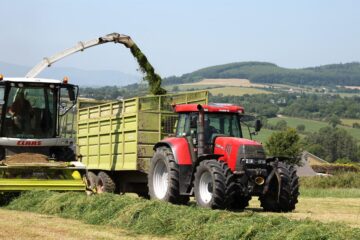
The clocks have gone back, the sheds are filling up and, here in Foulksmills, the straw we baled over the summer is now doing its real job. This time of year we get asked a lot about where KosiBed comes from and why it’s different from a bale of straw shaken out in a pen. So we thought we’d bring you behind the scenes.
A harvest that made every bale count
It hasn’t been an easy year for tillage. A survey by the IFA National Grain Committee, in line with Teagasc projections, puts this year’s national grain crop at about 1.92 million tonnes, roughly 14% down on last year. A wet January held up fertiliser, then much of the country went dry from mid-June right through August, and later-sown spring barley took the worst of it.
Less crop means less straw. On top of that, more land is in the Straw Incorporation Measure, where straw is chopped back into the ground, and Agriland reports that some areas were short of straw from early in the season. The silver lining was quality: the warm, dry weather gave plenty of bright, well-saved straw.
Fodder is tight too. Teagasc’s August fodder survey found farms had an average of about 4.1 months of winter feed, against a target of at least five, with several south-east counties lower again. With more farmers also feeding straw as fibre, every bale has a job to do.
Grown, saved and made on our own farm
KosiBed starts life in our own fields. We grow the crop and bale the straw ourselves, so we know exactly what went into it and how it was saved. That control matters, because bedding is only as good as the straw it’s made from.
Once the bales are in, the straw is chopped and dust-extracted here on the farm. That’s the step that turns ordinary straw into KosiBed: a clean, fine-chopped bedding with the dust taken out.
Why chopped and dust-extracted makes a difference
- More absorbent: chopped straw soaks up moisture far better than long straw, so pens stay drier for longer.
- Cleaner animals: a dry bed means cleaner calves, cattle and horses, and less time spent mucking out.
- Less dust: important in closed-up winter sheds and stables, especially for young stock and horses with sensitive airways.
- Goes further: when straw is scarce and dear, getting more use from every load is good sense.
We see KosiBed used in calf pens, cubicles, loose sheds and stables, and on farms and yards right across the country.
KosiBed straw pellets: the other KosiBed
We also stock KosiBed straw pellets, a separate product sold at retail. They’re a handy option for horse owners, poultry keepers and small pets. Just remember they’re two different products: KosiBed chopped bedding for pens, sheds and stables, and KosiBed straw pellets for those who prefer a pellet bed.
Plan your bedding early this winter
With straw supplies tighter and transport costs up this year, it pays to work out your bedding needs now rather than in January. Count your stock, think about how long they’ll be housed and talk to us about what you’ll need. We deliver nationwide in Ireland and to Europe, and we’re always glad to talk to distributors and anyone looking for bulk orders.
If you have any animal health worries over the housing period, such as coughing calves or a horse with a dust allergy, check in with your vet or Teagasc adviser.
Get in touch
Want to order KosiBed or ask about bulk loads? WhatsApp us on 087 283 2443, email accounts@kehoefarming.com or use our contact page. From our yard in Foulksmills to your shed.
Sources: UkrAgroConsult / Agriland – Ireland’s grain production (Oct 2026); Agriland – Straw trade 2026; FarmAI – Teagasc winter fodder survey (Aug 2026).