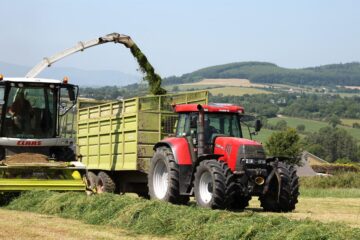
Walk into most yards around Wexford this week and the conversation turns to the pit before long. After this summer’s drought, a lot of farmers made less silage than usual and had to dip into winter stocks early. With cattle and dry cows now housed, the question is simple: will what’s in the yard last until turnout?
Here at the mill in Foulksmills, that’s the question behind most of the calls we’re getting about FibreGold ReadyFibre at the moment. So here’s a look at what farmers are doing to stretch their fodder this winter, and where a bale of precision-chopped straw fits in.
First things first: do the sums now
Teagasc’s beef notes for November are clear that this is the month to check fodder reserves, and not to wait until the pit is nearly empty before making a plan. Working it out now leaves time to make cost-effective decisions rather than panic buys in February.
The rough rules of thumb Teagasc gives for a fodder budget:
- Silage pit: measure length × width × height in metres and divide by 1.4 to get tonnes of fresh weight (based on silage at 22% dry matter).
- Bales: allow about 750kg fresh weight per bale, though it varies from farm to farm.
- Monthly demand: roughly 1.4 tonnes of fresh silage per suckler cow, 1.3 tonnes for older cattle and 0.7 tonnes per weanling.
Multiply by the number of stock and the months you expect to be feeding, and you’ll quickly see whether there’s a gap.
How big is the gap this year?
For many farms, it’s real. A Teagasc survey through its advisers back in August found a quarter of farms were 10–20% short of winter feed, with another 14% facing a significant shortage.
The eight FarmElevate Lighthouse dairy farms, run by Teagasc and Tirlán in the counties hardest hit by drought, gave a useful picture. On average they were short almost 20% of their winter feed, about 28 days. Encouragingly, a Wexford farm in the group was one of two with more than enough.
Straw is the go-to option
The most popular measure on those Lighthouse farms was adding straw to the dry cow diet, with 88% of them doing it. Teagasc reckons straw alone adds around six days of feed on those farms. Combined with selling cull cows early, extra meal, hay and a late cut of silage, the farms stretched their supplies by 40 days in total.
The good news is that this year’s straw is top quality. The Irish Grain Growers Group pointed out that, while yields were back, the dry weather meant straw was baled in excellent condition and is well suited to feeding cattle. They suggested a couple of kilos of straw and a kilo of rolled barley in the ration for young stock or dry cows to help silage go further.
One word of caution: straw is not a like-for-like swap for silage. It is low in energy and protein, so it has to go into a properly balanced ration. Teagasc advises anyone feeding a TMR to work with a nutritionist so the diet meets each group’s needs, and to talk to your vet or Teagasc adviser before making big changes for in-calf cows.
Where FibreGold ReadyFibre comes in
If you’re putting straw through a diet feeder, chop length and consistency matter. Long straw can be slow to process and lets cattle sort the mix. That’s why we make FibreGold ReadyFibre, our precision-chopped straw for TMR and diet feeder systems.
- Consistent precision chop so it mixes evenly with silage and meal.
- Diet feeder ready: no splitting, shaking or extra processing time in the wagon.
- Clean, reliable fibre, produced here on the farm in Co. Wexford.
- Approx. 250–400kg bales, wrapped for outdoor storage, so it can sit in the yard until you need it.
Our motto for it is “No Messing. Just Feed.” Open the bale, load it and get on with the day. We also do Diet Feeder Ready Straw if that suits your system better.
Learn more this week
Teagasc’s National Dairy Conference takes place in Cork today, Wednesday 25 November, and the National Beef Conference is on Monday 30 November at the Hodson Bay Hotel, Athlone, from 5pm. Both are worth a look if you’re planning the winter ahead.
Talk to us about your winter fibre
Whether you’re stretching silage for dry cows or balancing a finishing diet, we’re happy to talk it through. Bulk orders and nationwide delivery are available, and we ship across Europe too.
WhatsApp or call 087 283 2443, email info@kehoefarming.com, or see the FibreGold ReadyFibre page.
Sources: Teagasc Beef Management Notes, November 2026; Teagasc, FarmElevate Lighthouse farms; Teagasc, National Fodder Meeting; Agriland, Irish straw and grains; AHDB, forage alternatives; Teagasc Dairy Management Notes, November 2026.